With the costs of producing a title skyrocketing, what are the big three console makers doing to help combat this issue? How and why are we where we are today?
To answer this, we need to take a look back - back at a time when a few friends could get together and make a profitable game.
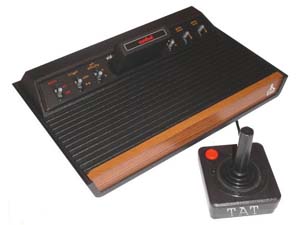
Back in the days of the Atari 2600/5200 and the Intellivision, the console manufacturer, in most cases, was the only publisher of titles for the system. As the technology needed to produce the cartridges got cheaper and cheaper, a few companies popped up and started to produce carts that 3rd party development groups could use to sell their titles on without having to obtain direct approval from the console manufacturer.
Needless to say, this caused a lot of pain for the console makers.
After several lawsuits and lots of headaches, Atari became the first to develop a solution that was mutually beneficial and became the standard for business in the gaming industry. Their simple and effective solution was the game royalty. For a small royalty, anyone was allowed to release titles on the Atari 2600 and future systems. At the time, this royalty was minimal and came with few if any restrictions.
As a result of Atari’s innovation in business, the market both boomed and crashed. The Atari 2600 became arguably the most popular development platform of its time. For just a few thousand dollars, just about anyone could purchase a development card for the 2600, get together a couple of friends, and make a title. The development cards came with minimal documentation and even less instructions. Most of the diagrams were hand drawn, and while useful, were also a headache.
For a while the royalty system was huge for Atari and the gaming industry as a whole. Unfortunately, the lack of any real quality control also lead to the eventual crash of the gaming market as it was at the time.
A few years later Nintendo, Sega, NEC, and a few others decided to enter the market and try to kick start it again.
When they entered they looked back at both the successes that were made as well as the failures. They realised that the royalty system was the way to go. They also realised that if they didn’t add restrictions to ensure quality games were released on their systems that they would eventually be the cause of the next crash. Thus most of the new manufacturers instituted rather intense certification procedures and requirements.
Unfortunately, development assistance barely improved during this generation or over the next two generations. The improvements primarily came in the quality of the development hardware itself and the diagrams provided. In addition, new complications arose for a significant portion of the potential development industry. Not the least of these was the lack of documentation in languages other than Japanese. This made it all but impossible for small developers outside of Japan to even consider developing on most of the new systems over the following generations.
One of the big negatives of the NES and Genesis/SNES generations was the high royalty costs, but even with the lack of general development tools, costs were quite low to make games and generally only needed three to six months and a half dozen developers to develop a fairly high quality title. During this time, royalty costs ran in the $15 range for most platforms. This doesn’t include cost of carts, certification, and development kits. For the average game selling at $40 at retail, a developer/publisher stood to make about $15 from each sale. With costs as low as they were to make the games in general, a title could sell 25,000 copies and still be profitable. This meant that most titles were profitable and companies that were able to get games certified for release were usually successful.
As mentioned, one of the big downsides of the 8-bit and 16-bit generations was extremely harsh certification requirements and restrictions. While Sega eased up the content restrictions a bit with the genesis, they were no where near what Sony eventually offered with the PlayStation platform.
Nintendo remained particularly harsh. They limited the number of releases a company could make on the system per year as well as what content could be in the titles. They typically would prevent any major releases from third party developers coming out at or around the same date as one of their own major titles. Rumors abound that they even refused to certify games that could have made their titles not appear to be the best the system had to offer, thus putting several great studios out of business.
Heading into the 32/64-bit generation, the market got a severe shakeup.
Sega had just released several expensive and virtually useless add-ons for the Genesis. With the Saturn they were now charging a decreased royalty around $13 per title, and released a really difficult to develop on platform without any real improvement in development tools.
Both Sega and Nintendo still refused to provide timely translations of development guides. Nintendo - they stuck with carts in large part to avoid the extremely long load times that resulted from using CDs. This unfortunately left them with the same high media costs that had always plagued the industry; even higher in a lot of cases now. Sega and Sony decided to greatly reduce media costs through the transition to CD technology while also providing a huge increase in storage.
Sony entered the market and with a few brilliant but simple changes took over in roughly three year’s time from launch. While Sony didn’t provide any real development tools, they did provide some translations of development guides and a fairly simple architecture. Sony also set a significantly lower royalty on their system of roughly $8 per game.
In large part due to Sony, American and European developers were finally able to enter and compete in the console gaming market again, albeit still later than their Japanese counterparts.
With most titles now selling at $50 and development costs rising in large part due to the mounting art costs, the benefits that Sony brought were all but essential to make a profitable game. On the Sega Saturn, the average title brought in around $22 for the developer/publisher. This money was quickly taken up by marketing and development costs. With costs to develop entering the upper hundreds of thousands being common place, a game had to still sell around 25,000 to 100,000 copies to remain profitable on the Saturn.
On the Nintendo N64, things were even worse. Titles were hitting the $60 mark very early in the systems life, yet with the increased cost of the carts and still high royalty of around $15 per title, developers/publishers only made around $15 per game sold. This resulted in titles having to sell around 35,000 to 150,000 copies just to break even.
Sony, on the other hand, hit a near perfect mark. With the lower royalty and CD media costs, developers and publishers stood to make around $27 per $50 game sold. This meant that comparable games only had to sell roughly 15,000 to 75,000 copies to break even. Thus significantly reducing risk associated with development on the PlayStation.
Heading into the next generation, Microsoft stepped in with the Xbox and Nintendo kept fighting with the Gamecube against Sony’s PS2.
The PS2 kept Sony’s business plan with the PlayStation virtually unchanged. Same royalty, same quality of development tools, same certification requirements, on and on. After the release of the Xbox and GameCube, Sony did change some of their certification requirements. These changes primarily affected the US market and were focused at maintaining a high quality brand image in face of competition from more powerful hardware.
Sony cert changes ranged from blocking titles with only 2D graphics, to placing general graphics quality bars, and other vague “quality” requirements. In a lot of cases, these changes occurred while a title that “violated” them was in the process of being certified, thus causing the title to fail cert and increasing the cost to the developer/publisher to release the title. There are also rumors that Sony began to use similar tactics to those that Nintendo used during the NES days in regards to delaying titles in cert to make sure the Sony’s first party releases got prime release times with decreased competition. These changes in cert process and requirements began to damage some of Sony’s relationships with third party developers and in a few cases actually caused long time developers to go out of business. Most notable of these was Working Designs.
MS and Nintendo focused on releasing relatively easy to develop for systems. Microsoft, taking cues from their dominance in the PC gaming industry, built up a sizable set of development tools for the Xbox, with an extra focus on online with Xbox Live. Taking a cue from Sony’s maneuvers with the original PlayStation, MS also offered reduced royalties and a simplified certification process. They dropped the royalty initially to $7 per title.
MS also focused on improving the certification system by making it predictable and efficient. They reduced the average time to cert by over 50% (down to about one month) and would notify of cert changes for months before they went into affect. A significant portion of the cert time savings were the result of them fully evaluating titles once received and providing a mechanism for developers/publishers to obtain status during cert on any issues found so they could start fixing them to resubmit almost as soon as the first cert attempt was complete. Comparatively, Nintendo and Sony would evaluate the titles and wait until the end to submit any failures. In many cases they did not fully evaluate the titles causing still more delays.
Nintendo failed to make any significant improvements over their previous generation other than a small royalty decrease midway. They even failed to produce translated documentation in a timely manner. As a result, they continued to lose marketshare.
While Microsoft made huge improvements, ultimately they failed in large part due to several major missteps in Japan. Not the least of these is their failure to secure an early offer from Squaresoft regarding the Final Fantasy series. As time progressed, the Xbox lost pretty much all Japanese support, even though their European and American support increased due to the ease of which experienced PC development houses could migrate to the platform.
Overall, all three platforms provided about the same potential revenue by the end of the generation. After disc media, royalty, and retailer profits, the average $50 title provided about $27 back to developer/publishers with Nintendo sending back about $4 less on average due to a higher royalty. Game development costs soared into the millions and were averaging close to two million by the end of the generation.
Heading into the current generation, the market has completely changed. Last generation all the systems primarily competed using the same base offerings. This generation the rules are all mixed up, and as a result it’s all but impossible to tell who might win this generation.
Microsoft hit the market first with a worldwide launch of the Xbox360. While it cut the life of the Xbox down to an almost disgraceful four years, it did give Japanese developers who had issues with competing versus experienced American and European studios a reason to come on board. MS continued to improve development tools heading into this generation; most notable is how they took several very frustrating aspects of developing for modern consoles and chose to handle them within an operating system that is always running.
In addition to the above, MS also is rumored to have decreased their base royalty down to $5 per game to help offset the increased costs of developing for this generation. They also integrated the Xbox Live Arcade service into every system to provide a method for “budget titles” to be released on the system and profit. The royalty for these titles is approximately 10% the price charged.
MS has also provided several low cost ways for developers to make additional revenue on titles released for the platform. These include the release of “Gamer Pictures” and “Themes” that users can purchase for around $1 or less. These generally cost almost nothing for the developers to make, thus providing almost pure profit.
Sony has taken a very different approach. This generation they have decided to focus on releasing the most powerful piece of hardware out there. To help offset the cost, they are rumored to have increased their base royalty to $10 per title sold. They have also chosen to offer a disc media with significantly higher capacity to the Xbox360, even though it will cost extra for developers/publishers.
With the PS3, Sony did greatly improve their development tools this time around. Sony is also building up a marketplace similar to that available on the Xbox360, though as of right now the system lacks similar features to the gamer pictures and themes available on the Xbox360, thus limiting extra revenue opportunities to developers.
The Nintendo Wii took a very different approach to any previous system. For the most part, they have chosen to stick with the prior generation’s hardware power and instead offer a unique control and gaming experience as the driving force for consumers to purchase their console. This time around they have provided translations of their documentation in relatively good time. But they have not dropped their royalty, thus maintaining the highest royalty of the three big console manufacturers. Their high royalty is in part offset by the ability of developers to reuse most of the knowledge and tools from development on the GameCube and the significantly lower art costs of developing for the Wii in comparison to the Xbox360 and PS3 platforms.
Right now, it is still too early to tell who will win this generation. The PS3 is definitely positioned to be the top competitor coming in with the most powerful hardware and absolutely astounding installed base from the previous generation. The Xbox360 is making inroads through their lower royalties, lower development costs, alternative revenue sources, and increased Japanese support. The Wii is selling great so far due to its innovative control scheme, quirky titles, low consumer cost, and general ease of development.
The above information barely scratches the surface of what it has cost and still costs to make a game and what hurdles developers and publishers have to go through. Even the easiest to follow cert rules are the length of a novel and can take months to comply with. Development hardware now costs from $10,000 to as much as $50,000 based on the platform you wish to develop for, per development kit. Even if you make a title, getting it published, marketed, and distributed can sometimes cost as much as the actual game development costs. If you choose to license an engine for your game, you could be looking at an entry fee of close to half a million dollars, if not more -just for the engine and some support.
One thing is for certain: with the ever increasing development costs, companies are becoming more concerned about the risks associated with releasing video games. As usual, there is a ton of doom and gloom articles; Nintendo themselves have even warned of another game industry crash on the horizon. If you told anyone back in the days of the Atari that game development costs would increase from thousands to millions on average in just two decades, few would have believed you.
Yet, here we still are. While the costs are sky rocketing, more and more developers enter the market each day. Hundreds of titles are released worldwide each year. Selling a game with even a 0.1% attach rate on the PS2 can be profitable. The market is growing in leaps and bounds each year.
No one can predict who will ultimately win this next generation with any certainty. But, whoever does win could have a significant impact on the games we see in the future and what it costs to make them.
By Anthony Hanses
Sony cert changes ranged from blocking titles with only 2D graphics, to placing general graphics quality bars, and other vague “quality†requirements.
Not Sony but SCEA, SCEA refused titles that were 2D etc.
Let’s not label the complete Sony family as the bad guys.
Comment by Yfronts — Jan 25, 2007 @ 4:09 pm
Could history repeat itself? Well i suppose only time will tell.
Comment by TheTruePredator — Jan 25, 2007 @ 4:10 pm
Great article.
Comment by Neil — Jan 25, 2007 @ 7:41 pm
I also heard that development tools for the PS3 are better. But I’m curious: what are these tools? What compilers and IDE’s and debuggers do developers use?
Comment by henning — Jan 25, 2007 @ 10:33 pm
I do not see any mention of Microsoft’s XNA tools here. You should check out what it can do for the indies and small developers. The Express version is free with a $99 yearly subscription fee to deploy games to the 360, no subscription to deploy games on Windows PCs though. The Pro version is supposed to be released this year with a $1000 (rumor) price tag. $1000 for Pro developer tools that run on a decent PC is cheap.
Not intedning to step on any toes or start a flame war, just thought it should be mentioned since it is a growing community now and many new developers will come of it, I hope
Comment by rijit — Jan 26, 2007 @ 4:32 am
I meant you can deploy games to Windows for free… Even sell them commercially with the Express version.
Comment by rijit — Jan 26, 2007 @ 4:34 am
Excellent analysis! Greetings!
Comment by JaggFab — Jan 26, 2007 @ 7:38 am
This generation SONY has done many of the same mistakes that brought giants like Nintendo and SEGA to their knees in the past.
The future might not look too bright for SONY but a future with M$ in control of my favourite pastime is a much bleaker looking one.
So SONY has to man up and pull through. In 12-24 months I expect that the PS3 has redeemed itself in the eyes of all gamers. Lets hope history is going to repeat itself just like with the PS2 that started off like a huge disappointment only to become a huge success ones the first AAA exclusives rolled out a year or so after launch.
Comment by Kamiboy — Jan 26, 2007 @ 10:44 am
From the Editorial Creator:
Of note I am currently working on a game using the XNA tools mentioned above. We are developing it using 2 retail Xbox360’s and a beefy laptop. Using XNA its being co-developed in Japanese and English as well as for the Xbox360 and PC. We also plan to port to WinCE if the tools become advanced enough to assist us in doing so before we release.
Comment by Anthony Hanses — Jan 26, 2007 @ 8:19 pm
What Sony needs to do is put together an ace marketing team (with some qualified techies to answer questions) and send them to all the developers to convince them that the PS3 is the way to go. It is exactly what Redmond has been doing and that is why a new game is announced every week for the 360 and usually does not even mention a PS3 port (nevermind PS3 exclusive). Other than a few games locked up as 360 exclusives, there is no reason why a strong push to developers cannot get a PS3 version made. Redmond’s development support is probably not significantly better, they just market it relentlessly.
Comment by One47 — Jan 29, 2007 @ 3:57 pm
32 bit technology brought a revolution in home video games. The 3D real-time environments we explored gave us an incredibly immersive and emotive experience. With PS2 the only title that really blew me away was the GTA franchise, apart from that, nothing had quite the impact that I’d experienced when the PS1 first launched. that is to say I only think GTA really used the technolgy to create a game where the gameplay matches the graphics.I’ve got an Xbox360. But to be honest I havn’t found a single game that holds my attention. The industry seems to be in a creative vortex, where corporate market annalysis dictates that develpment churns out the same old licences. the new consoles have a big focus on on-line gaming, but if you’ve ever played a 64player battlefield2 match then you realise the consoles have a long way to go before they can offer the sort of gaming experience that will create the next huge market expansion for home consoles.
Comment by G2 — Jan 29, 2007 @ 8:30 pm
A very good read. well, since we have inadvertantly started to discuss the future of the PS3 then I too think or atleast that the Success of PS3 will come along much like PS2. i.e. a year or so after it’s been launched. I think its a multifaceted war that sony is fighting, at one front it is pitching its Blu-ray disc against other media such as HD-DVD, and winning that front cuz four studios (maybe five if universal has gone neutral) have pledged support for it. The other front being the CPU of the PS3 itself, i think they are pitching that console to be in the middle of this transitional phase in CPU architecture, saying that yes, we are ready for multi-core processors in homes. Whether they’d be able to garner the same support in time that was given to PS2’s emotion engine is certainly unknown. i think we;ll have to rely on games like Lair, F1, motorstorm, MGS4 etc to be able to impress other developers and not just gamers so that more developers start taking PS3 as their primary platform when making new IPs etc. thats the only way, in my opinion, to nab exclusives.
Comment by Shahnam Haider — Feb 4, 2007 @ 3:38 pm
I’ve been a long-time Nintendo fan, and still am. I don’t plan on purchasing a PS3, but I enjoyed this article a lot.
I have a question though:
Is the information about how many titles need to be sold in order for a developer to break even currently available?
Knowing this in the past has surely made an impact in regards to both developers and consumers alike.
With Nintendo’s ease of developement, yet highest demand for royalties, Microsoft’s low royalties, and Sony’s high cost of everything, it’d be interesting to see how the three fare against each other.
“This generation SONY has done many of the same mistakes that brought giants like Nintendo and SEGA to their knees in the past.”
Agreed!
Comment by Scatt-Man — Feb 6, 2007 @ 4:53 pm
Anthony, any idea how the royalties compare for GBA, DS and PSP? Thanks
Comment by davidgibbo — Apr 3, 2007 @ 3:01 am
RSS feed for comments on this post. TrackBack URI
Leave a comment