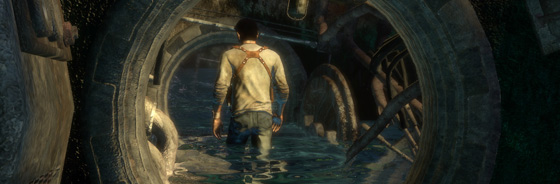

Having played the cream of what will constitute the PlayStation 3’s initial offering of games in the UK, we have not a shadow of doubt that Resistance: Fall of Man is the best game on offer. MotorStorm is a great game, and positively screams “next-gen”, but its technological achievements vastly outshine its structure and coherence. Resistance, on the other hand, hangs together beautifully as a game, and while it may not innovate in everything it does, it is extremely well fettled and sports plenty of new ideas.
Structure
Structurally, Resistance: Fall of Man conforms to the fps norm, featuring 11 levels, which are punctuated by fairly frequent checkpoints plus sub-levels delineated by cut-sequences. Within that, you will find driving sequences in a variety of vehicles, notably jeeps, tanks and Chimeran crawlers - mech-type vehicles that, believe us, you’d rather drive than attempt to blow up. And, of course, there are some fearsome boss-battles that leave you with a feeling of triumph when you prevail.
Techniques
No first-person shooter would be worth its salt if it didn’t force you to develop new techniques and, happily, Resistance does just that. The most basic thing it encourages you to do is to select the right weapon for the task in hand. We’ll take an in-depth look at the weaponry later, but there’s no doubt that Resistance’s finest attribute is its weaponry.
It’s perhaps the first fps that doesn’t have a single weak weapon (although the organic mine-layer isn’t great). But it’s not just about picking the right weapon - you need to make judicious use of all weapons’ alternate fire (triggered using the left bumper, as opposed to right bumper for normal fire).
With the rocket-launcher, for example, holding down alt-fire slows your shell down, allowing you to guide it - a technique you must master in order to overcome some seemingly unstoppable bosses in the latter stages of the game. Perhaps the most interesting weapon is the Auger, which fires energy bursts. It has a low (20-shot) capacity, but can fire through cover, and its targeting reticule still turns red to indicate it’s aimed at an enemy, even when you can’t see that enemy. Its alt-fire erects a small temporary shield which stops everything bar fire from other Augers. Invaluable in big fire-fights, as long as you’re not facing Auger-equipped Chimera.
Grenades are also important: there are three types: conventional frag ones, hedgehogs - which are Chimera objects resembling footballs that explode in a welter of arrow-like objects - and air-fuel grenades, which are like sticky Molotov cocktails. The latter can provide major rushes of satisfaction, if you manage to stick them to airborne enemies.
Outflanking is another technique you frequently need to employ, particularly when faced by fixed machine-guns. Resistance generally lets you take several different paths, although at times (particularly when indoors) it rail-roads you in certain directions.
Storyline
The storyline is excellent. The game is set in a fictional 1950s Britain which has been overrun by the Chimera, an alien race which has built a network of tunnels under the country and is close to wiping out its human inhabitants. You play US Marine Nathan Hale. At first, he is accompanied by a squad of fellow Yanks, but they are soon wiped out by the locust-like creatures which infect humans. Hale is the only survivor - able to resist Chimeran infection, although he becomes half-Chimera. Which means he can avail himself of the Chimera’s health-regeneration serum (each vial of which restores a quarter of his health; a quarter of his health will automatically regenerate if he keeps out of the way of bullets for a while).
Hale roams around the country, taking on the Chimera, more often than not, with their own weaponry. Occasionally, he comes across reinforcements, but in the latter half of the game, he hooks up with a Royal Marine called Cartwright - often, he must drive a jeep while Cartwright mans a machine-gun. As the story unfolds, the importance to the Chimera of cooling becomes clear - culminating in a climax in a snow-covered London. Naturally, it’s up to Hale to single-handedly send the Chimera packing. The (excellent) cut-scenes, which always segue seamlessly into action, are augmented by Intel dotted around the levels, which Hale can pick up and read.
Weapons
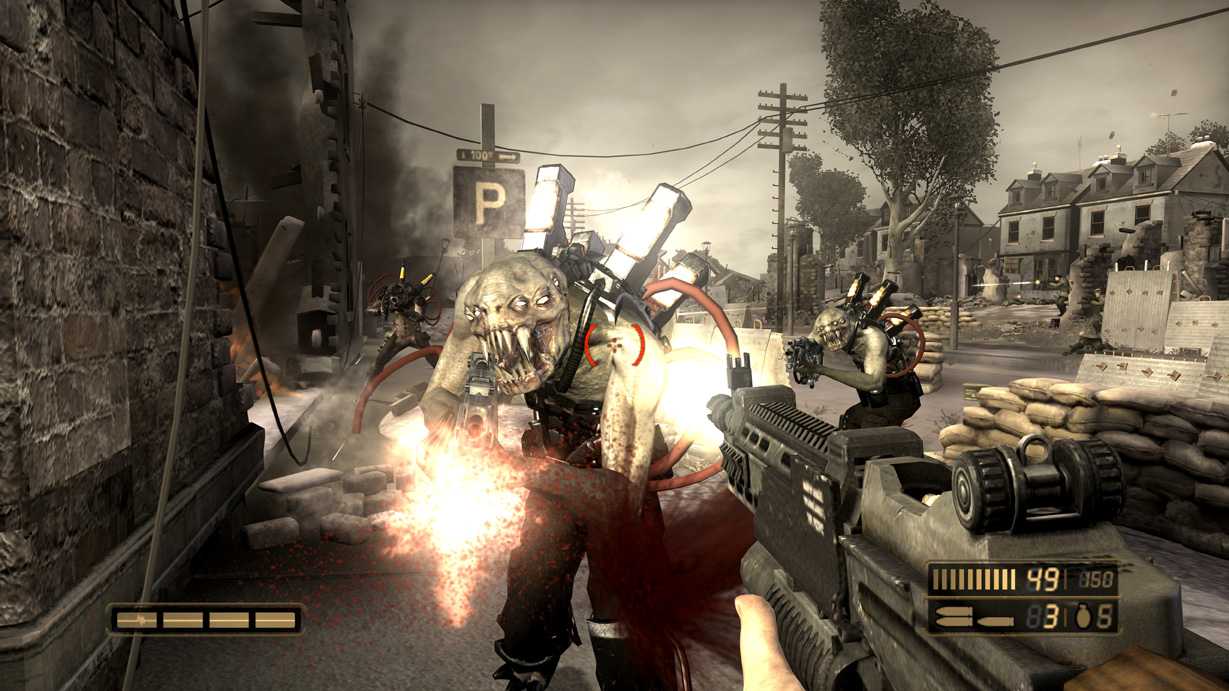
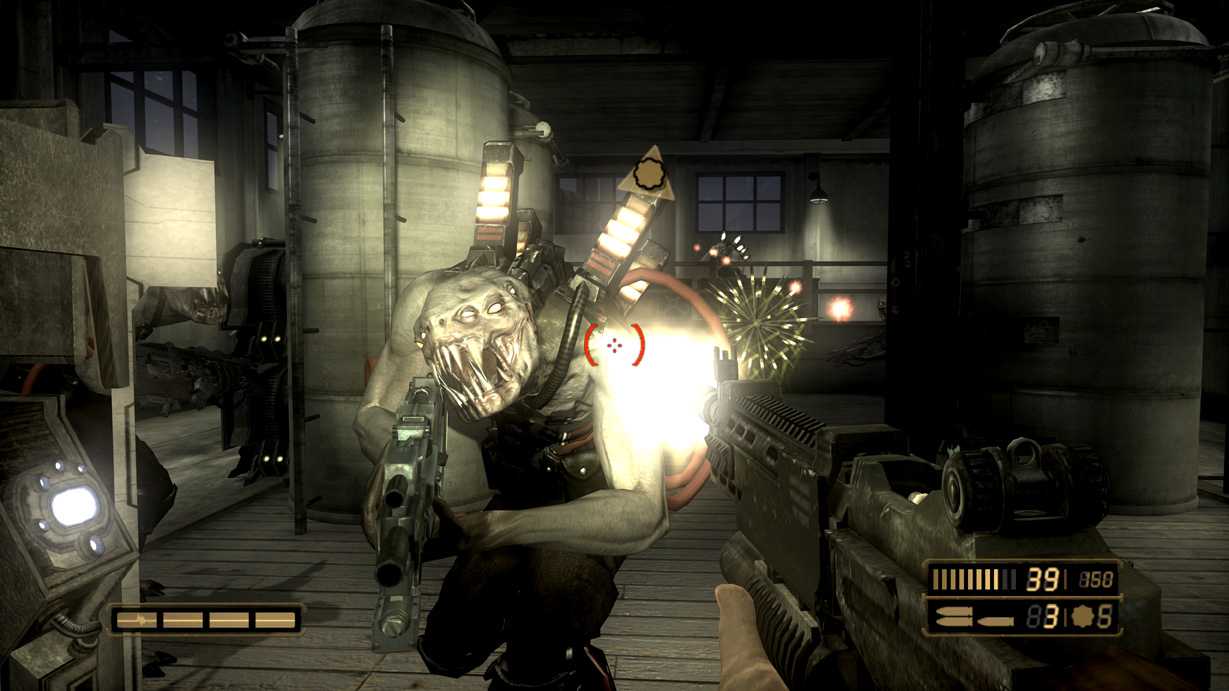
Resistance’s weaponry is the game’s strongest point. You start off with a Carbine, which is a decent all-rounder - while it doesn’t have a vast amount of stopping power or a particularly big magazine, it has a decent zoom (triggered by pressing R3), which almost takes it into sniper territory. Alt-fire is an exploding, grenade-like bullet - those, however, are in pretty short supply.
The Chimeran equivalent of the Carbine is the Bullseye. It doesn’t have the range of the Carbine, but has a bigger (70-shot) magazine, and the alt-fire launches a tracer bullet, which enables you to pump shots into enemies without aiming precisely. Near the end of the game, you will find an upgraded version of the Bullseye.
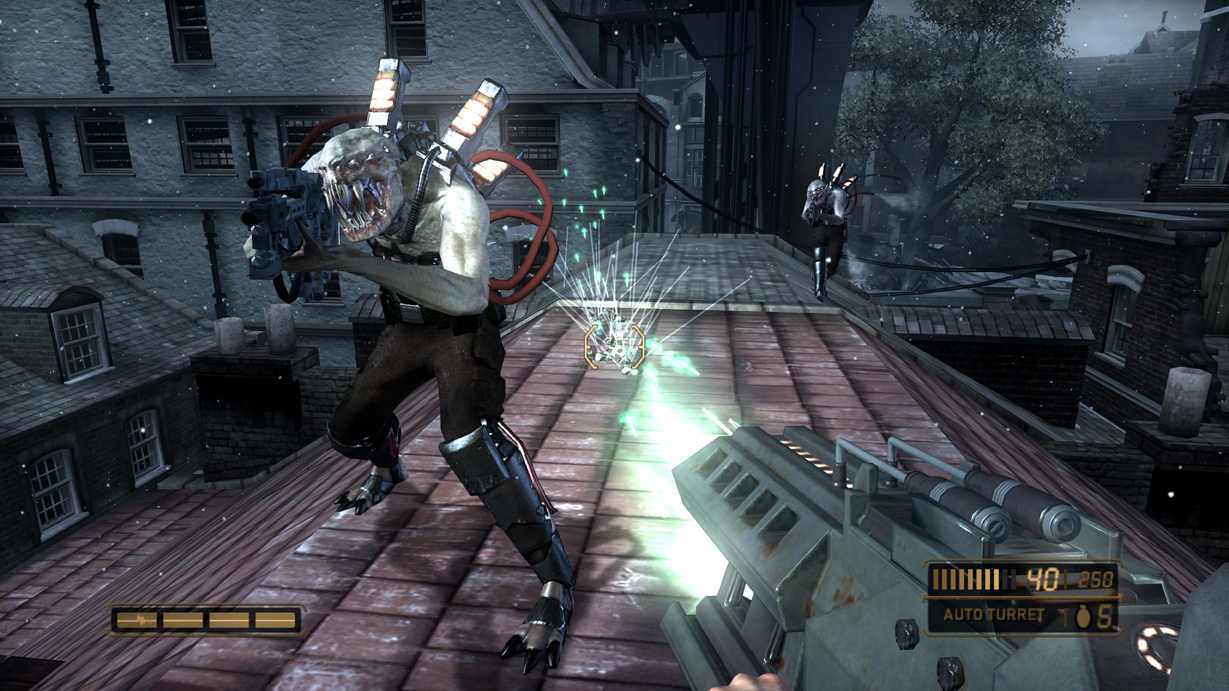
There’s an excellent shotgun (alt-fire empties both barrels at once), the L23 FarEye - a sniper rifle with an interesting alt-fire which slows down time for a period. The XR-005 Hailstorm is a chain-gun which causes decent splash damage but swiftly runs out of ammo; its alt-fire detaches part of the gun, turning it into an auto-fire turret. The LAARK rocket-launcher we’ve covered - it can only take two rockets and ammo for it needs to be hunted down. Perhaps the wackiest weapon is the XR-003 Sapper, which pumps out plasticky-looking organic mines, which are then detonated using alt-fire. It’s the weakest weapon on offer.
Control system
Resistance: Fall of Man’s control system is pretty conventional, although it uses the bumpers rather than triggers for weapon-firing. The crucial weapon-swapping system is excellent - you hold down the right trigger and select your weapon by pointing the left joystick. X is jump, left trigger crouch, circle throws a grenade, R3 zooms your weapon if applicable, D-Pad down toggles between grenade type, square reloads and triangle is context-sensitive (for example, it triggers switches).
The sensitivity of the control system is spot-on, and its feel is perfect. Which will keep fps aficionados happy. There is minor use of the joypad’s motion-sensing abilities - when the zombie-like menial’s grab hold of you, you must shake it vigorously to get them off you.
Enemies
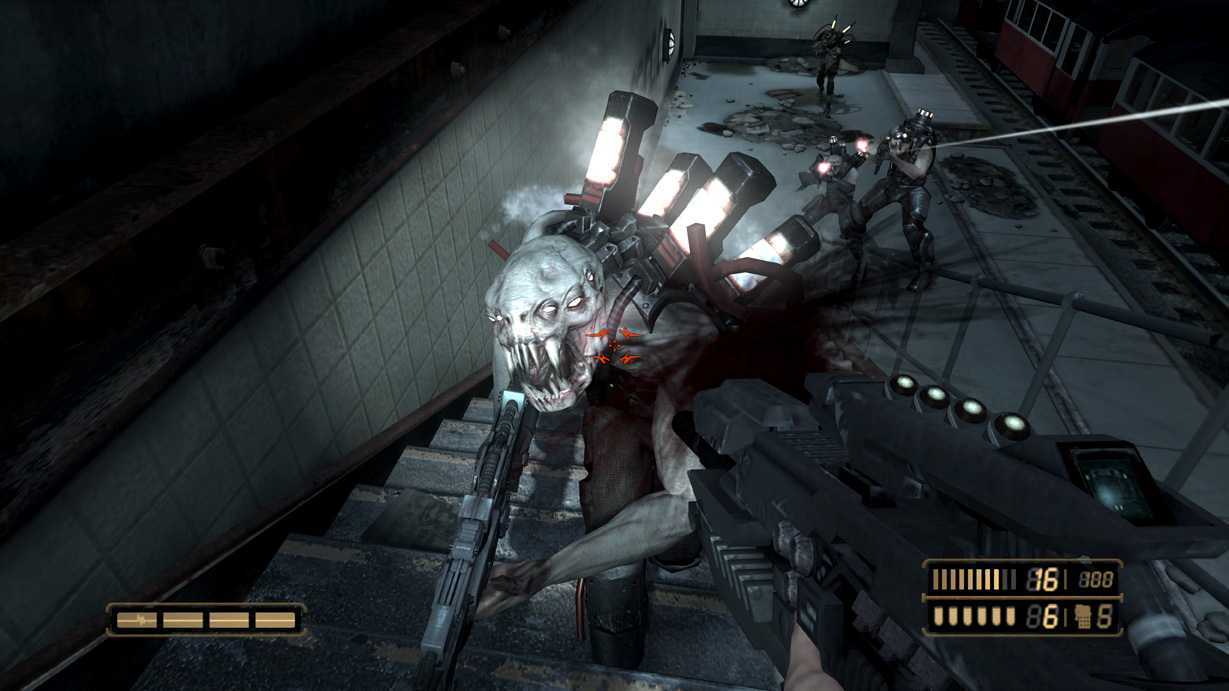
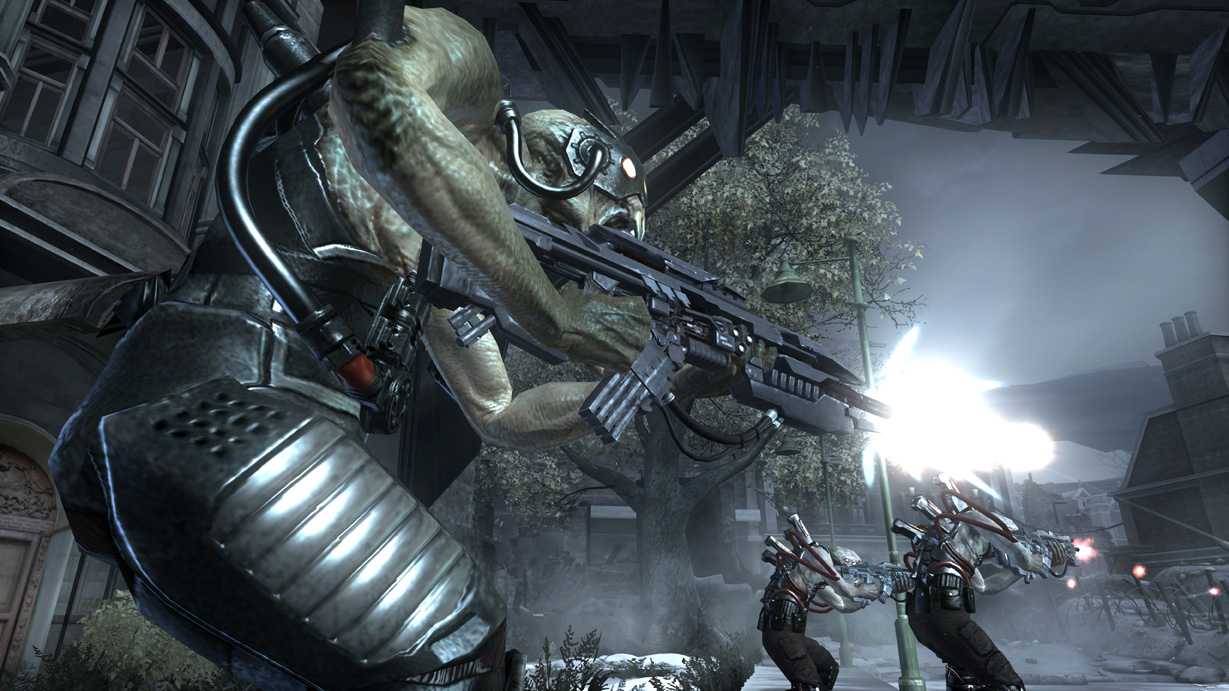
The Chimera are tough and varied opponents. The storyline reveals how they incubate from humans. So at their most basic level - menials - they are unarmed zombies who will grab you and chew you to death. There are two types of scorpion-like face-huggers, reminiscent of Half-Life 2 - leapers and rollers. Several can be taken out with single shotgun blasts.
Then you have the dog-like howlers, hybrids, hardfangs, advanced hybrids, steelheads, slipskulls and greyjacks. The latter are huge, but are genetic experiments gone wrong, so are easy to take down. But some of the Chimera are seriously mean opponents, armed with rockets and so forth. At the end of the game, you come across the angels - huge, flying squid-like creatures with deadly attacks if they get in close. It’s tricky to take them out with anything other than rockets or air-fuel grenades.
The different classes of Chimera have different weapons and behave differently - some, for example, can stick to walls and ceilings, and you discover that it’s vital to hit them with a Bullseye tag as they flit around annoyingly. Each class demands a different technique.
Overall
You’re going to love Resistance: Fall of Man. While it doesn’t rip up the first-person shooter blueprint like, for example, Gears of War, it is an excellent game which stands out for the innovative nature of its weaponry, its excellent story and is chock-full of memorable gameplay moments. And it looks great, particularly in 1080p. The closest thing that he PS3 has to a Halo or Gears of War equivalent - and it’s much longer and meatier than the latter.
Steve Boxer